Body massage · 8 min
Body massage and circulation: what can you expect?
Body massage is a manual treatment that works with muscles and other soft tissues to support comfort and relaxation. Some techniques can change local blood flow for a short time, but that does not prove lasting whole-body gains. This guide compares connective tissue massage (bindevævsmassage), gentle massage (blid massage) and other body treatments (kropsbehandlinger), and explains when you should seek medical care instead.

On Danish treatment menus, blid kropsmassage means gentle body massage. Start with your symptoms and goals, not with the strongest-sounding treatment.
Can body massage improve blood circulation?
Massage can affect local blood flow and blood vessel function, but the effect depends on the method, the tissue, and the person. These findings do not show that massage treats poor circulation or vascular disease. A warm feeling after a session is not proof that blood supply to deeper muscles has improved.
Two research examples show why the difference matters. One small trial found better blood-vessel function after Swedish massage in inactive young adults. Another study of rolling massage on the forearm found increased arm blood flow and improvements in some circulation measures, but not every measure. Neither result means every massage visit will help the same way.
If you are looking for ways to improve blood circulation (forbedre blodcirkulation), keep massage in perspective. Gentle walking can help blood flow. Unexplained swelling needs a check, not just rubbing.
For your visit, separate two goals: feeling less tense and treating a circulation problem. Ask what goal the practitioner is working on, what change to expect, and how you will know if it helped. Do not judge success only by warmth, redness, or force.
Understanding connective tissue massage
Connective tissue massage works on the tissue under the skin, not on every sore spot as if it were a muscle knot. Fascia is part of this tissue network. But naming a tissue does not mean the method will fix it or correct a circulation problem.
Some research supports it as an add-on to exercise for chronic neck pain. In one trial, both exercise groups improved, and the group that also got connective tissue massage had more relief in some areas, including night pain. These findings suggest a possible supporting role, not a cure for stiffness.
Scar treatment needs care. A clinician-guided scar massage can help healed scar tissue stay mobile, but it should start only after the wound is fully healed and with the treating team's advice. Do not treat a recent surgical cut like an ordinary tight patch of skin.
When you discuss treatment, ask what the therapist wants to work on and why. Ask for plain language instead of claims about breaking up tissue. Set a simple goal, such as turning your head more easily.
Different techniques serve different purposes
Treatment labels can help start the talk, but they should not replace an explanation of what will happen. Ask about movement, pressure, treated areas, and the goal before you choose among kropsbehandlinger.
Gentle and Swedish-style massage
Blid massage means gentle massage. Swedish or classical massage is a common Western style. Gentle describes the pressure you want.
Ask for a comfortable approach if you want relaxation or are unsure about your limit. Severe pain is not required for good massage.
A useful request is: Please start light and check with me before you add pressure.
You can also say which areas you do not want touched.
Compression and deeper work
If a menu says compression, ask whether it means hand pressure, a device, or compression garments. These are not the same.
Ask what deep tissue means in that practice.
More force is not always better. Vigorous work has rare serious risks, and some health problems need changes. Ask for lighter pressure if it feels too much.
Goal-directed therapeutic massage
Therapeutic massage — terapeutisk massage on Danish menus — should start with a discussion of the problem. Massage research shows short-term help for some pain, but no one style works best for all.
Ask for a plan that fits your daily life. For example, choose less pain when you look over your shoulder instead of remove every knot.
Source: [6]
Which approach fits your symptoms and goals?
The best start is a safety check and a clear goal, not a guess that connective tissue massage or deeper pressure must be better. The practitioner should know your health history and adjust the session. If your symptoms sound like illness or injury, get medical care first.
Use these prompts when you discuss your options:
- You want relaxation: Ask for comfortable pressure, tell them about touch sensitivity, and agree on areas to avoid.
- You have recurring discomfort: Describe when it starts, which movements trigger it, and what you want to do more easily.
- You are considering connective tissue work: Ask why that approach fits you and how progress will be checked.
- You are recovering from surgery: Bring instructions from your treating team before asking for scar work.
- You have unexplained swelling: Get medical assessment instead of booking a circulation-focused treatment.
Preparing for treatment and reviewing the result
Make the first talk useful. Describe symptoms in everyday language, when they started, and if they are changing. Tell the practitioner about diagnoses, medicines, injuries, surgery, and pregnancy before the visit is planned. Your health history can change whether massage is a good fit and how it should be adapted.
Use a simple checklist:
- Choose one priority. Pick the activity or discomfort you most want to improve.
- Set boundaries. Agree on pressure, position, draping, and areas that are off limits.
- Speak up during treatment. Ask for an adjustment right away if pressure feels too strong; severe pain should not be part of the session.
- Record the result. Note whether your chosen activity feels easier afterward and whether that change lasts.
- Review before repeating. Talk about an unhelpful or unpleasant response instead of booking more intense work right away.
Keep aftercare simple and ask for advice that fits your case. If circulation is your concern, talk about daily movement instead of depending on appointments alone. Walking and avoiding long sitting can help leg swelling, but swelling that does not go away still needs a cause checked.
Source: [5]
Safety comes before stronger pressure
Check with your healthcare team before massage if you take blood-thinning medicine, have a bleeding disorder, severe bone loss, a recent blood clot, or broken bones. Healing wounds and nerve damage also need care. Tell the practitioner if you are pregnant so they can talk about the best position and whether massage is right for you.
Unexplained one-sided leg swelling, pain, warmth, or skin-color changes can point to deep vein thrombosis. Get urgent help rather than massaging the area. If these signs come with breathlessness or chest pain, call emergency services.
The takeaway
Choose massage by purpose, comfort, and safety, not by big circulation promises. Ask what the session is meant to do, agree on a clear goal, and review the result before more visits. Keep medical symptoms separate from wellness goals, and make room for both proper care and daily movement.
Body massage in Frederiksberg
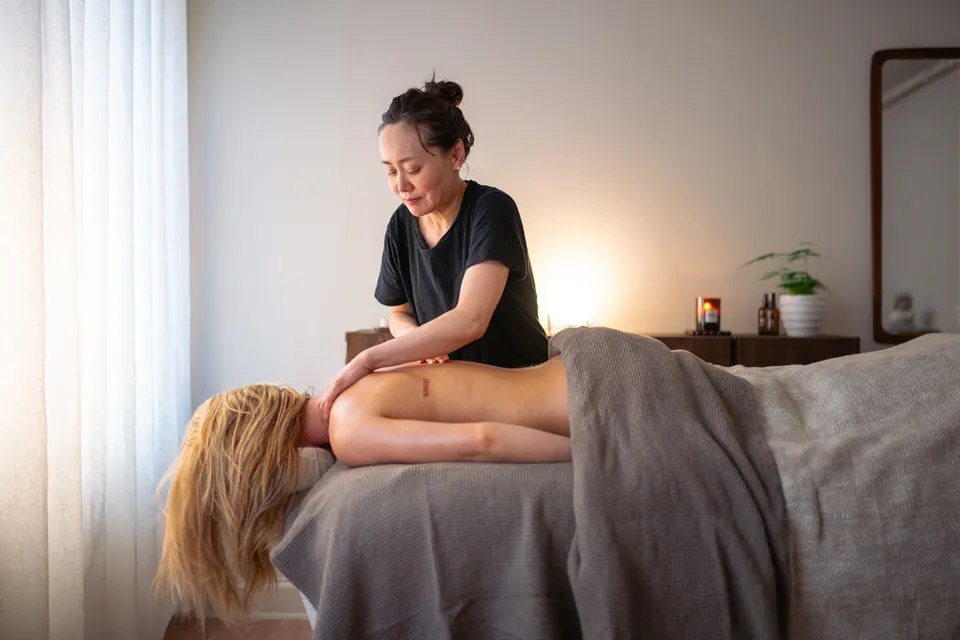
You and your practitioner agree on pressure and areas of focus. You will find Manual Therapies at Falkoner Allé 104, 2000 Frederiksberg. Choose a session according to the pressure, area and experience you prefer, and ask about any health concerns before booking.
Q&A
Can massage reliably fix poor circulation?
No. Massage may change local blood flow for a short time, but it does not prove lasting whole-body circulation gains or treat vascular disease. If circulation worries you, start with movement and a medical check for unexplained symptoms.
Is connective tissue massage (bindevævsmassage) better than gentle massage?
Not always. Connective tissue massage may fit some goals, especially alongside exercise for neck pain, but the best choice depends on your symptoms, comfort, and goals. A stronger-sounding method is not always better.
When should someone skip massage and seek medical help?
When symptoms suggest illness or injury, especially unexplained swelling. One-sided leg swelling, pain, warmth, or skin-color changes may be deep vein thrombosis and should not be massaged. If these signs come with breathlessness or chest pain, get emergency help.
What should I ask before treatment?
Ask what the session is meant to do, which areas and methods will be used, how much pressure to expect, and how progress will be judged. Also share your health history and agree on a practical goal.
Sources and scope
This article provides general information and describes the scope of our services. It is not individual medical advice. The sources below concern the topics indicated; they do not validate every treatment mentioned on this page.
- Franklin et al. (2014): Massage therapy restores peripheral vascular function after exertion
- Soares et al. (2020): Rolling massage, muscle oxygenation and microvascular reactivity
- Toprak Celenay et al. (2016): Stabilization exercises with and without connective tissue massage for chronic neck pain
- Cambridge University Hospitals: Scar massage information
- NHS: Swollen ankles, feet and legs (oedema)
- NCCIH: Massage Therapy — What You Need To Know
- Mayo Clinic: Massage therapy — risks and precautions
- NHS: Deep vein thrombosis (DVT)
First published: 27 October 2026. Text rewritten and updated: 27 October 2026.