
Body massage · 9 min
Connective tissue massage and deep tissue: what is the difference?
You want a massage that gives proper attention to tension, then encounter terms such as fascia, connective tissue and deep tissue. They do not all mean the same thing. Here is a practical guide to the differences and to choosing from what you actually feel. You and your practitioner agree on pressure and areas of focus.
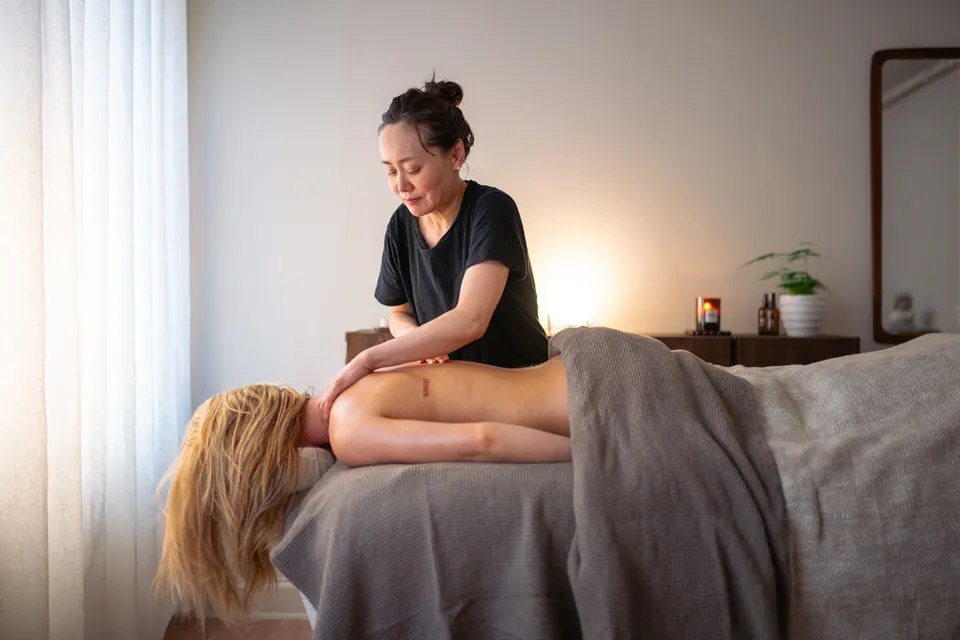
What is connective tissue massage?
Connective tissue supports and links structures in the body. Fascia forms part of it, including layers surrounding muscles. Muscle and connective tissue are closely associated, but the terms are not interchangeable. Neither are the names of all techniques used to work with them.
Connective tissue massage describes hands-on work focused on that tissue. The name covers different approaches. Some practitioners mean a particular traditional method using targeted pulls through the skin; others use it more broadly for fascial and soft-tissue work. Asking what actually happens during the appointment helps clarify the difference.
If an area feels tight, you do not have to identify the exact tissue responsible before making an appointment. Describe what feels restricted and when you notice it. The practitioner can then explain how the proposed session relates to your priorities.

The diagram shows three levels of connective tissue within skeletal muscle. It illustrates structure, not a prescribed massage depth.
- Epimysium
- around the whole muscle
- Perimysium
- around a fascicle
- Endomysium
- around an individual muscle fibre
View a larger illustration
Source: [1]
How does it differ from deep tissue massage?
The focus of the session
Here, deep tissue means slower, concentrated massage with pressure adapted gradually. You and your practitioner agree on pressure and areas of focus. Connective tissue massage refers more specifically to a tissue focus or a particular manual method.
The type of contact
Some connective tissue techniques use smaller contact areas and pulling movements through the skin. Deep tissue may involve the hand, thumb or forearm. The important point is how the pace and pressure suit your response, rather than the contact surface alone.
What you book at our clinic
Deep tissue massage allows time for one area, with pressure adjusted throughout. This treatment is temporarily unavailable.
What should a thorough massage feel like?
You can feel clear pressure without feeling pushed through an ordeal. Contact that feels comfortable on the lower back may be too strong beside a shoulder blade or on the upper arm. Intensity therefore changes throughout a session, including when you have chosen deep tissue.
You and your practitioner agree on pressure and areas of focus. Holding your breath to be a good client does not help the appointment. Useful feedback allows the work to stay focused while leaving you able to relax into a position and respond to the contact.
Thoroughness also involves time. A slower pace leaves space to work around one area instead of rushing over the entire body. It is perfectly reasonable to give a relatively small region the attention of a full session, particularly when that is your main reason for coming.
Does connective tissue massage work?
Massage can relieve pain and tension-related discomfort. With research into connective tissue massage, the method matters: a study of a defined treatment programme does not demonstrate the effectiveness of every massage using the same label.
A small 2024 trial reported improvements after both classical and connective tissue massage for chronic low-back pain. Another trial involving 70 people found broadly similar results for those methods within a combined treatment programme. These findings support possible relief rather than one universally superior technique.
In a neck-pain trial, adding connective tissue massage to stabilisation exercises improved some outcomes more than exercises alone. That combination is useful to consider: massage can have a place alongside movement, without asking you to choose between hands-on care and activity.
Which massage fits your priorities?
When one area takes up your attention
In deep tissue massage, a larger part of the session can be spent on a single area, such as the back or shoulders.
When training is the starting point
Sports massage suits an appointment where activity and workload should shape the conversation. Explain whether you cycle, run, lift weights or work in a physically demanding job. That gives the choice of areas more meaning than simply requesting the hardest possible massage.
When warmth and rest appeal
Hot Stone Massage offers a different experience with heated stones and flowing movements. The standalone treatment lasts 90 minutes. A shorter warmth element is also available as a 15-minute Hot Stone add-on to relevant body massages.
What about cupping and other add-ons?
Sports massage, deep tissue massage and body cupping are temporarily unavailable. It uses suction and feels different from pressure applied by hand. Choose it if the method interests you, and discuss how it would fit into the appointment.
An add-on is not required for a worthwhile massage. Giving enough time to the most important area often makes more sense than collecting the largest number of techniques. Booking shows the options actually available with the treatment you have chosen.
Mention if you need your skin to be free from visible marks for a particular occasion. Cupping can leave marks. A session using manual massage alone remains an available choice, and you do not have to add another technique to make the work feel complete.
Source: [5]
Can you do connective tissue massage yourself?
Searches for DIY connective tissue massage cover everything from gentle self-massage to firm rollers. Begin with an area you can reach comfortably and contact you can control. Stop if the skin or underlying area becomes increasingly irritated rather than continuing to chase a release.
A massage ball or foam roller is not essential. Your hands can provide a short, comfortable pause. Avoid using your full body weight to reach deeper into a painful spot, and avoid pressure over the front of the neck, unexplained swelling or a fresh injury.
You do not need a crack or a dramatic sensation to make a routine worthwhile. If the aim is comfort, assess it through comfort: does moving feel easier, and are you ready to get on with your day? That is more useful than repeatedly testing whether the same spot still feels tender.
Source: [1]
Your muscles need movement between appointments too
Massage can give you a welcome break from tension. What happens afterwards matters as well. Change position, take breaks from repetitive tasks and choose activity you can keep enjoying. A sore back does not need a completely new routine every week.
Research does not establish tight connective tissue as a complete explanation for persistent pain. For chronic neck pain, longer-term benefits of massage compared with placebo remain uncertain. Combining relief with activity and having recurring symptoms assessed is therefore a sensible approach.
You and your practitioner agree on pressure and areas of focus. Individual exercise prescriptions and care for a specific injury belong with the appropriate healthcare professional. You can still choose massage as part of how you look after yourself.
Source: [6]
Your first appointment in Copenhagen
Our clinic is at Falkoner Allé 104 in Frederiksberg. You do not need to work out which layer of the body deserves attention before you arrive.
Explain where you feel the tightness, how long it has been there and what you would like to find easier. You agree pressure and focus before the work begins. If you have several wishes, start with the most important one and allow other areas to fit the time available.
Current durations, prices and add-ons are shown in booking. Our comparison of relaxing, sports and deep tissue massage also sets the options side by side. The point is to help you choose an appointment that makes sense for you, rather than a name that sounds impressive.
When should a massage wait?
Tell us about blood-thinning medication, recent surgery, wounds or skin problems before arranging deeper massage. A new injury, fever, suspected blood clot or unexplained swelling needs assessment first. Sharp pain, numbness or weakness should not be pressed through.
You do not have to memorise a long checklist. If something about your health makes you uncertain whether massage is appropriate, contact us before the appointment. We can clarify the practical details and tell you when advice from your clinician is needed first.
Source: [7]
Questions about connective tissue massage
Is connective tissue massage the same as deep tissue?
No. A practitioner may use elements of both approaches, but the terms describe different ways of working with tissue. Deep tissue massage is temporarily unavailable at the clinic.
Can massage ease tight connective tissue?
Massage can bring relief and greater comfort to a tight area. That is different from demonstrating a permanent change in one specific tissue layer during a single appointment.
Does deep tissue need very firm pressure?
No. Pace, precision and gradual adjustment are central to the treatment. You should be able to give feedback without holding your breath or bracing against the contact.
Is there research supporting the treatment?
Small studies have reported improvements with connective tissue massage, often alongside other interventions. They do not establish the same result for everyone or make the technique a universal solution.
Should I add cupping?
Only if you want the add-on and it suits the appointment. Manual massage can stand alone. Available combinations are shown when you book.
How much time should I choose?
A clearly defined focus may suit a shorter appointment. Several areas need more time. Choose around your priority and contact us if you would like help matching the duration to it.
Can I book connective tissue massage in Frederiksberg?
Deep tissue massage is temporarily unavailable at the clinic. The treatment page explains the technique.
Sources and scope
These sources cover anatomy, studied methods and practical care. Details of our treatments and options come from the current clinic catalogue.
- Cleveland Clinic: Myofascial Release Therapy
- Dal et al. (2024): Connective tissue and classical massage for chronic low back pain — randomised trial
- Er & Yüksel (2023): A comparison of connective tissue massage and classical massage for chronic mechanical low back pain
- Toprak Celenay et al. (2016): Stabilisation exercises with and without connective tissue massage for chronic mechanical neck pain
- NCCIH: Cupping — technique, effects and safety
- Gross et al., Cochrane (2024): Massage for neck pain
- NCCIH: Massage Therapy — safety and precautions
First published: 27 October 2026. Text rewritten and updated: 27 October 2026.