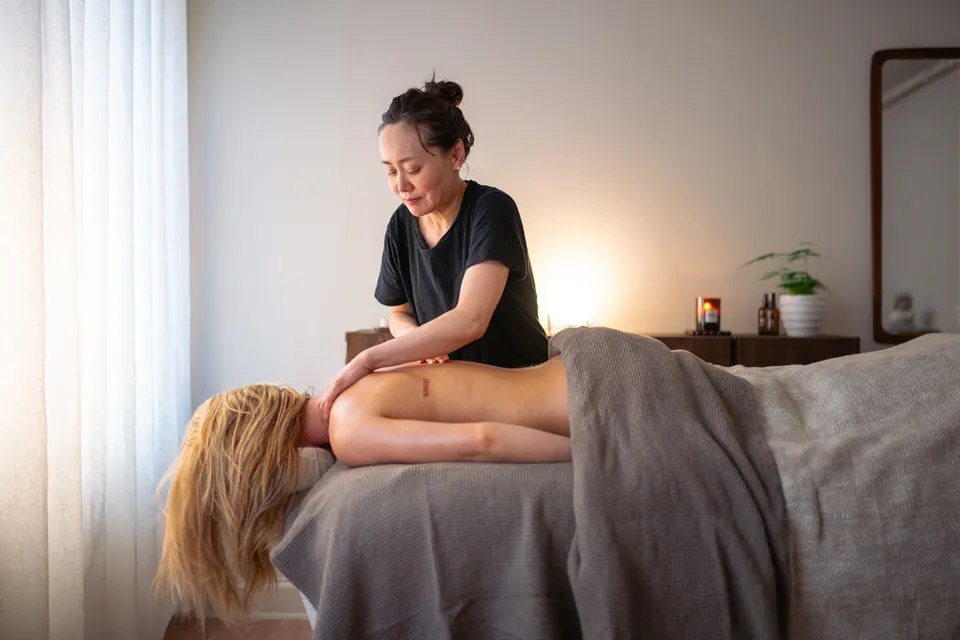
Body massage · 8 min
Tension headaches – what helps and when massage makes sense
Pressure builds around your forehead. Your neck feels tired, and your shoulders have crept closer to your ears than you intended. When headaches return, it is worth looking at both the symptoms and the day around them. Here is a practical guide to tension headaches, small breaks and massage, with research and a clear distinction between comfort and diagnosis.

What is a tension headache?
Tension headaches typically feel pressing, mild to moderate and often affect both sides of the head. People commonly describe a band around the forehead. Everyday movement usually does not make them worse. Muscle tension can contribute, but persistent headache has a more complex explanation.
The name can suggest that every case is simply a tight neck. It is not that straightforward. International headache classification distinguishes different patterns and frequencies. Establishing the type is more useful than choosing a treatment because one pressure point happens to feel tender.
This guide is intended to make your next choices easier: what can you notice, which habits are worth reviewing, and when might a gentle massage fit into what you do?
When should you seek help rather than massage?
In Denmark, call 112 for a sudden, extremely severe headache or a headache with new weakness, speech difficulties or impaired consciousness. Do not wait for a massage appointment. Headache with fever and a stiff neck also needs urgent medical attention.
See a doctor if headaches are severe, happen several times a week or change in character. Nausea, one-sided throbbing pain and marked sensitivity to light or sound can fit another headache type.
You do not need to know every term before asking for help. Explain when it started, how it feels and what is different from normal. That information matters more than guessing the right diagnosis.
Tension headache symptoms: what to record
Record frequency, duration, intensity and other symptoms. Note any medication you take and what was happening around the episode. A headache diary gives a clearer picture than memory at the end of a busy week.
Keep notes brief enough to actually write them. A few lines about the morning, afternoon and evening may be more useful than an elaborate template left blank. Look for changes rather than trying to explain every episode immediately.
Bring the notes to a medical appointment. If massage is appropriate afterwards, you can also tell us which areas feel tense. We need your experience and relevant precautions, rather than a diagnosis you have made yourself.
Source: [2]
What helps tension headaches in everyday life?
Regular sleep, meals, enough fluid and physical activity are important everyday measures. Relaxation and varying work positions can also help. For frequent symptoms, a physiotherapist can guide movement and a plan suited to you.
Choose one realistic change to begin with. A lunch break away from your screen? A short walk? A better transition between work and the evening? A habit you can repeat is easier to evaluate than a long list of new tasks started at once.
Massage can be part of a break, but it should not have to do everything. If the same strain continues throughout the week, it is worth looking at that too. A useful approach connects several small choices rather than relying on one appointment.
Source: [1]
Tension headache exercises and small movement breaks
Change position before chasing the perfect stretch
Get up from your chair, walk a little and let your arms move. A break does not have to look like a workout to add variety. Use it to notice whether your shoulders are raised or your head has stayed facing one direction.
Keep movement comfortable
Move gently and avoid forcing your neck into end positions. Do not crack, pull hard or push through pain. If a movement triggers or worsens the headache, get individual advice instead of repeatedly trying it.
Build a routine you can remember
Link the break to something you already do, such as filling a glass of water or finishing a meeting. Useful exercises do not have to be complicated. With recurring symptoms, an adapted programme is more relevant than copying a random online sequence.
Source: [1]
Neck pain, shoulder tension and the jaw
Jaw disorders can occur alongside headaches. Notice whether you clench your teeth or chew gum frequently. Jaw pain, locking or limited movement should be assessed by a doctor or dentist.
When describing neck pain or tension, distinguish a tired feeling from pain on movement and from the headache itself. Explain whether they happen at the same time. This helps avoid combining different experiences under one vague explanation.
At the clinic, wanting jaw massage can lead to a different choice from wanting a quiet session around the neck and shoulders. We do not automatically choose the deepest or longest massage because an area is tender. First, we agree on what needs attention.
Source: [6]
Massage for tension headaches: what does research show?
In a trial involving 56 participants, headache frequency fell after both massage and placebo treatment, without a significant difference between them. The massage group reported greater overall improvement and reduced pressure tenderness. This separates perceived relief from a proven specific effect.
NCCIH describes the overall evidence for headache massage as limited. That does not rule out finding a visit helpful, but it does not justify promising that a particular session will remove your headaches.
Set a concrete aim for the visit: comfortable pressure, attention to an area and time to settle. Afterwards, consider what you gained from it. If headaches continue or change, the plan needs appropriate healthcare input rather than simply more pressure.
Which massage suits your priorities?
Head Calm: head, neck and shoulders
Choose Head Calm for a shorter, gentle visit focused on these areas. We adapt the pressure and techniques as we work. It is a simple way to make time for a pause without booking a whole-body treatment.
Relaxing Body Massage: a broader visit
Body massage is an option when you want attention to several areas and a choice of pace. Let us know if your neck and shoulders are a priority; we agree the focus before starting.
Buccal Massage: focused on the jaw
If you want work around the cheeks and chewing muscles, explore Buccal Massage with Kamila. It includes intraoral work with gloves and your consent. It is not a diagnosis or a standard treatment for every headache.
Make your first visit straightforward
Tell us what has been established about your headaches, which areas feel tense and any precautions we need to consider. You can say that you prefer fewer words during the treatment, or that you would like the techniques explained first.
During the visit, ask for lighter pressure, a different position or a break. An area does not have to be worked on firmly to receive attention. We would rather adjust early than have you lie there enduring discomfort.
Afterwards, note how your neck and shoulders feel and whether the experience suited your aim. Avoid changing every other habit on the same day to test the massage. A straightforward, honest impression is a useful basis for your next choice.
Massage in Frederiksberg, Copenhagen
Manual Therapies is at Falkoner Allé 104. Below you can explore relevant visits and continue to available times and current prices. Contact us if you would like help choosing between a focused session and a broader visit.
If you choose massage as part of your approach to headaches, know what you are booking: a hands-on session for comfort and muscle tension, rather than a guarantee of a particular number of headache-free days.
The related articles explore facial tension, stress and the vagus nerve. They offer different perspectives on taking a pause, so you can continue with the subject that is most relevant to you.
Tension headache questions and answers
What does a tension headache usually feel like?
It is often described as pressing, mild to moderate and affecting both sides of the head, sometimes like a band around the forehead. That pattern alone cannot diagnose a new or changed headache.
What helps tension headaches?
Regular sleep, meals, fluids, movement and relaxation are useful starting points. Frequent or severe headaches need a doctor’s help to establish the type and plan.
Which tension headache exercises are best?
Start with gentle movement breaks without forcing your neck. A physiotherapist can adapt exercises for recurring symptoms. No single online sequence suits everyone.
Does massage help tension headaches?
Some people experience relief and less muscle tenderness, but research does not guarantee fewer headache days. Consider massage as a possible addition to an assessed plan.
Is firm massage better for headaches?
Not necessarily. Pressure should be tolerable and adapted to your response. You do not have to endure pain to have a worthwhile session.
When is a headache an emergency?
In Denmark, call 112 for a sudden, extremely severe headache or new neurological symptoms such as weakness or speech difficulties. Fever with a stiff neck also needs urgent medical attention.
Can I choose jaw massage?
Yes, explore Buccal Massage if you want attention to the cheeks and chewing muscles. Jaw pain, locking or difficulty opening your mouth should first be assessed by a doctor or dentist.
Sources and scope
This article draws on Danish patient guidance, international headache classification and massage research. The treatments below are our services for relaxation and muscle tension, not a replacement for a headache diagnosis.
- Sundhed.dk, Patienthåndbogen: Hovedpine af spændingstype
- NHS: Tension headaches — symptoms and support
- International Headache Society: ICHD-3 — tension-type headache
- Moraska et al. (2015): Head and neck massage for tension-type headache — placebo-controlled trial
- NCCIH: Headaches — what you need to know about complementary approaches
- NIDCR: Temporomandibular disorders — jaw symptoms and self-care
- Dansk Selskab for Almen Medicin: Akuthåndbogen — hovedpine
First published: 27 October 2026. Text rewritten and updated: 27 October 2026.