
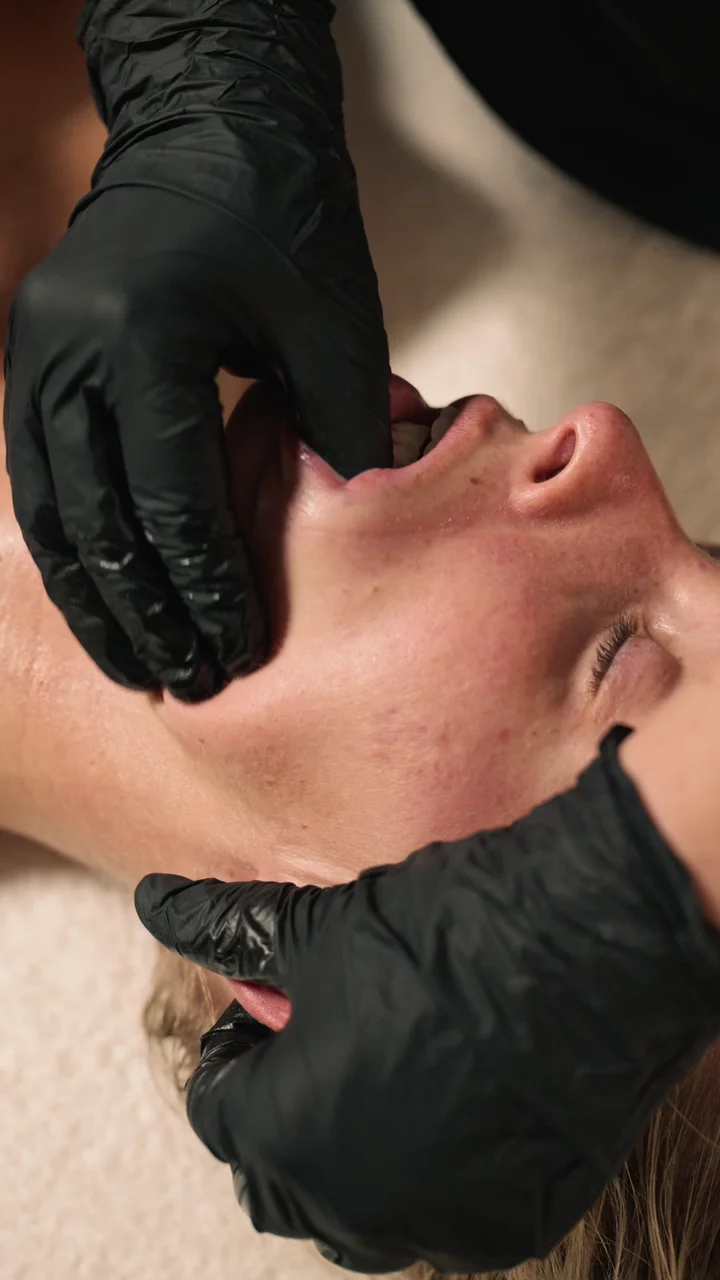
Intraoral cheek massage performed with gloves.

MANUAL THERAPIES · FREDERIKSBERG

Buccal Massage

Jaw tension. Bruxism. Clenched teeth.

60 minKamila

About the treatment

Buccal Massage

A facial massage focused on tension in the jaw area. It combines external work with intraoral massage, allowing you to reach the cheek tissues from both sides and precisely target areas requiring relaxation.

The treatment begins by working on the masseter muscles and the muscles of the face, neck, and nape, which can become tense when clenching the jaw. This is followed by an intraoral massage, which works on the inner tissues of the cheeks.

Individually tailored relaxation techniques help reduce the feeling of jaw clenching and provide relief to tense muscles. This treatment is primarily focused on the freedom, comfort, and relaxation of this area of the face.

A closer look · 0:52

See the treatment. Hear the experience.

A practitioner wearing gloves massages the inside of a cheek during Buccal Massage.

See massage of the cheeks and jaw, including intraoral work, and hear a personal account of the treatment at Manual Therapies in Frederiksberg.

Danish audio, English subtitles.

See time and price ↗

Buccal Massage — see the treatment

Danish audio, English subtitles.

Your visit, step by step

Is this treatment for you?

This treatment is designed for people struggling with jaw clenching, teeth grinding, and bruxism. It's also effective when the masseter muscles are pronounced, hard, and tense, and the lower face appears permanently clenched.

If you experience constant jaw tension, accompanied by headaches, neck pain, or even back pain, a intraoral massage can help you relax. During the treatment, We focus specifically on the masseters and the tissues surrounding the jaw.

Massage can also support other forms of therapy, including the use of dental splints for bruxism. It can be part of preparation for wearing orthodontic braces or support for those working with a speech therapist—the scope of work is then tailored to the recommendations of the treating specialist.

Before making an appointment, please read the contraindications listed below on the website.

Close-up of gloved hands during intraoral cheek massage.
Kamila performs an external facial massage at Manual Therapies.

What happens during your visit?

We begin by discussing your problem and the direction of your therapy. We want to know when you feel the most tension, how long it has been there, and what exactly you need support with. We also check for any contraindications to the treatment.

We pay close attention to the circumstances in which you clench your teeth—they aren't always obvious. Together, we examine your habits and identify the best course of action.

We work on the muscles involved in jaw clenching, as well as areas where associated tension may be present. An important part of the treatment is relaxing the scalp, nape, neck, and face.

In the second stage, we move on to an intraoral massage, working the cheek tissues from the inside. This part of the procedure is always performed wearing disposable gloves, which we change several times during the massage.

Everything takes place in a peaceful atmosphere. We adjust the intensity of the work to your sensitivity and tissue response—we stay in touch to ensure you feel comfortable throughout the entire procedure.

What results can you expect?

Primarily, it helps relax the masseter muscles and the muscles of the face, neck, and nape, where tension accumulates due to stress, poor posture, or unhealthy habits. You may feel greater freedom in the jaw area, a reduced need to clench your teeth, and a feeling of having "more space" in your mouth.

Immediately after the massage, your tissues may appear slightly fuller and your face may appear rosy. Give them a moment to calm down and observe how your sensation of tension changes.

Sometimes the initial relaxation effect is short-lived. Tension and the habit of clenching teeth often build up over many years, so returning to greater freedom requires patience and consistent practice.

Initially, we recommend repeating the treatment every two to three weeks, or scheduling a follow-up appointment when you feel your teeth tightening again. We adjust the frequency to your needs and response to the massage.

For severe tension in the masseter area, it's worth combining a intraoral massage with an alternating back or full-body massage. This type of massage also addresses tension outside the face and can help maintain a feeling of relaxation.

Release tension, feel free – relaxed masseters, a relaxed jaw and a softer facial expression.

Your visit

Duration and price

Your practitioner: Kamila

Prices in kr., including VAT.

Buccal Massage60 min
1195 kr.Choose & book

Optional add-ons

Add to your visit

Choose a little extra time for yourself. Available add-ons depend on your treatment and practitioner.

See all add-ons

Add-ons are optional. You can change your selection during booking.

FAQ

Good to know

Which variant should I choose?

The bucal massage is available in one option—60 minutes. The treatment focuses on relaxing the masseter muscles and the tissues surrounding the jaw.

If you're looking for a more comprehensive relaxation, we recommend Facemodeling®. This is a much more advanced therapy that incorporates elements of buccal massage, but involves a larger muscle group and more extensive bodywork.

You can always extend your session by an additional 15 minutes to allow us to more thoroughly work on areas requiring special attention. You can also choose Face Cupping to support lymphatic drainage, gentle Gua Sha work, or a nourishing conclusion to the treatment with an Esthemax mask, tailored to your skin type.

Depending on your needs, the therapist may also suggest a back or full-body massage. Tension in the back, neck, and back can accompany jaw clenching, so it's worth incorporating this into your treatment plan. Follow our guidelines—we choose holistic treatments with your comfort, appearance, and well-being in mind.

Can I ask for changes during the treatment?

No problem. Buccal massage is an intensive form of massage, so if the part performed inside the mouth is uncomfortable, we can stop it and continue the massage only on the outside of the cheeks.

We can also shorten and soften the intraoral phase, giving you time to familiarize yourself with the technique and see if it suits you. The remainder of the session will be performed traditionally.

If you'd like to change your entire treatment, please let us know before your appointment. If your chosen treatment fits within your scheduled time, we'll easily accommodate your booking.

During your massage, let us know right away if you need a break, a more comfortable position, or gentler pressure. We listen to your feelings and adapt our approach accordingly—your comfort is paramount to us.

How to prepare for a visit?

Please arrive a few minutes early. Let us know about any ailments, allergies, or previous treatments that may be relevant. If you have any special needs, please let us know before your visit.

If you have severe allergies or sensitive skin, bring your own tried-and-true skincare products to minimize the risk of irritation. We use only the highest quality products, but even they may contain ingredients that trigger allergic reactions.

On the day of your appointment, avoid alcohol and heavy meals before your treatment. Also, make sure to stay hydrated—both before and after each massage, including your facial. Drink water regularly, according to your body's needs. You can also choose herbal teas and infusions that you tolerate well.

Please maintain good personal hygiene. If you're planning a visit after an intense workout or other physical activity, please shower and put on fresh clothes. This is important for your comfort and the therapist's comfort.

Before each facial massage, we also ask that you wash your hair and scalp on the day of your appointment or the day before. Treatments involve intensive work on the scalp, so we want it to be clean, free of accumulated sweat, sebum, and styling products. This helps ensure hygiene and comfort during the massage, and reduces the risk of irritation. During the treatment, we strive to minimize product contamination of the hair.

There's no need to bring any accessories, towels, or sheets—everything is provided on-site at the clinic. Just wear comfortable clothes.

After each facial massage, we apply a UV cream to protect your skin from the sun. You'll leave the clinic with nourished skin, ready for the rest of the day.

Who is this treatment for? Indications

Bucal massage is designed for both women and men who experience tension in the jaw, lower jaw, and cheeks. It involves targeted work on the masticatory muscles and surrounding tissues, performed both inside and outside the mouth.

We especially recommend it to people who:

  • They clench their teeth during the day or while sleeping;
  • They struggle with bruxism and teeth grinding;
  • They experience stiffness, fatigue, or soreness in their jaw muscles;
  • They have very tense, prominent masseter muscles;
  • They notice that stress causes tension in the lower part of their face;
  • They experience neck and shoulder tension or headaches associated with jaw clenching;
  • They want to supplement dental treatment, the use of a bruxism splint, orthodontic treatment, or work with a speech therapist with a relaxing massage.

You don't have to be diagnosed with bruxism. If you feel like your jaw is constantly clenched and you have difficulty relaxing it, we can focus on improving the comfort in that area.

The scope and intensity are adapted to you. If you are undergoing dental or orthodontic treatment, we take your specialist’s recommendations into account. Read the contraindications below before your visit.

Can I massage my face if I have Botox or fillers?

After an appropriate break and in accordance with the recommendations of the physician performing the injections, we can perform intensive lifting massages. In our practice, we wait at least 4 weeks after botulinum toxin injection before performing a facial massage, and 2 to 4 months after filler injection. The timing and scope of the treatment are individually selected. Botox temporarily limits the activity of selected muscles, reducing their contractions and the associated facial expressions.

This contributes to a slight reduction in blood circulation, which in turn reduces proper oxygenation and nourishment of the skin. Massage perfectly improves these factors and complements proper care and work on tension in other areas of the face. Remember that by excluding some muscles, other muscles in the area can partially take over the functions of the "disabled" ones. Often, after many years of Botox use, thinner, more delicate, or "parchment-like" skin is noticeable, so to prevent this, regular facial massages are recommended.

After fillers, it is especially important to consider the type of preparation and the site of its injection. Deep manual work requires prior consultation with the physician performing the treatment. Before your appointment, always let us know exactly when and where the injections were performed, and what preparations were used. This will allow us to develop an appropriate plan, select the appropriate techniques and pressure intensity, and ensure the comfort of your skin and tissues.

When should I reschedule my appointment? Contraindications

Read the list below before booking. Contact us first if any of the points apply to you. Some conditions require consultation with a doctor or adjustments to the treatment.

Skin

  • Allergic or infectious skin inflammation.
  • Pustular and purulent acne.
  • Active rosacea.
  • Highly vascular skin.
  • Lichen.
  • Epidermal breakdown, open wounds, and unhealed lesions.
  • Dermatological conditions requiring pre-treatment evaluation.

Oral cavity and teeth

  • Purulent conditions of the oral cavity, particularly the tonsils.
  • Inflammation of the oral cavity, particularly the gums.
  • Canker sores.
  • Purulent lesions around the teeth.
  • Recent tooth extractions and unhealed areas following dental procedures.
  • Oral conditions requiring assessment before intraoral massage.

General condition and infections

  • First trimester of pregnancy - in our practice, we do not perform Buccal Massage during this period.
  • High-risk pregnancy.
  • Fever and flu-like symptoms.
  • Enlarged lymph nodes of unknown cause.
  • Severe allergic conditions.
  • Serious medical conditions requiring specialized treatment.
  • Diseases and symptoms of unknown cause requiring diagnostics.

Cancer and unexplained changes

  • Cancer, including lymphoma.
  • Post-surgical treatment of cancer—until consent is obtained from the treating physician.
  • Nodules of unknown origin.

Heart and circulatory system

  • Aneurysms.
  • Uncontrolled hypertension.
  • Severe heart disease.
  • Suspected myocardial infarction requires urgent medical attention.
  • Heart defects requiring medical consultation before surgery.
  • Advanced atherosclerosis.
  • Thrombosis.

Other conditions requiring consultation

  • Hyperthyroidism—particularly in relation to neck massage.
  • Paralysis or other dysfunction of the trigeminal nerve or its branches.
  • Mental illness, if the current condition impedes informed consent, contact, or safe conduct of the procedure.

Aesthetic medicine and dental procedures

  • Thread lifts — we do not recommend facial massage for at least 6–12 months after this procedure.
  • Botox — in our practice, we wait at least 4 weeks after botulinum toxin injection, unless the doctor recommends a longer interval. Botox is not a contraindication; massage is recommended to activate inactive tissues and support their nourishment once the recovery period has been observed.
  • Fillers — in our practice, we wait 2–4 months after injection. The exact timing depends on the product, injection site and recommendations of the doctor who performed the treatment.

Always inform us about any previous surgical procedures, aesthetic medicine procedures, and dental treatments—even those performed a long time ago. Your allergies and sensitivities are also important information. This will help us determine the appropriate intensity and scope of treatment.

How long does the effect of the treatment last?

How long the results last depends on the regularity of your visits, the condition of your skin, and your daily habits. Proper skincare, a balanced diet, and hydration are crucial—massages complement these good habits.

Systematic facial work can be compared to body training: consistency is key. We recommend appointments every 3–4 weeks. Initially, we may suggest more frequent appointments, then gradually lengthen the intervals and move on to maintenance sessions.

When performing a buccal massage, it's also important to address the habit of clenching your teeth. The muscles around the jaw can tense during sleep or during stressful times. Therefore, it's worth consulting with your dentist about your bite and whether you need a protective splint for bruxism or if orthodontic treatment is indicated. Properly tailored massages can support this process by helping to relax tense muscles.

We often suggest alternating different therapies, including body massages. Tension in the back, neck, and shoulders can affect comfort and facial appearance, so we select treatments to complement each other and create a cohesive plan.

Monitor how you feel. If you start clenching your teeth again, feel increasing jaw tension, or find it harder to relax, it's worth scheduling another session.

Focus on regularity and give yourself time - consistent care for your face and body helps ensure both freedom and comfort, as well as a fresh, rested appearance.

What treatments are recommended for pregnant women?

First and foremost, we recommend the Pregnancy Massage—a treatment created especially for expectant mothers. It's not just a massage, but a 90-minute soothing and enveloping ritual that includes gentle dry body brushing, a gentle massage, and a moisturizing facial.

We tailor everything to your needs and well-being. We use special pregnancy pillows that help support your body and ensure comfort during the procedure. You can change position or request a break at any time.

Massage can help ease the discomfort of pregnancy, relax tense muscles, reduce stress, and provide a moment of deep relaxation.

We recommend this treatment from the second trimester of pregnancy. Before your first visit, we encourage you to consult with your doctor to ensure it's appropriate for your condition and that there are no contraindications.

For expectant mothers, we also offer Head Calm and Sound Healing Sessions—calm sessions focused on calm and relaxation, selected based on individual well-being and any contraindications. We can also perform a Japanese Kobido lifting massage, which will be much less intense and more relaxing and soothing.

We provide professional care, attentiveness, and an atmosphere where you can feel calm and cared for. Your comfort and safety are our top priorities.

You can also give this special time to a loved one by purchasing a gift card (gavekort). You can purchase it online on our website or at the clinic.

Can I cancel or postpone my appointment?

Yes, please cancel or reschedule your appointment at least 24 hours before your appointment. You can do so by phone at +45 31 70 44 50, email at hello@manualtherapies.dk, or through our booking system.

Cancellations made with less than 24 hours' notice may result in a 50% fee for the procedure. No-shows without prior notice may result in a 100% fee for the procedure.

In case of emergency, please contact us directly – together we will find a solution.

Client reviews

After your visit

Selected client reviews of the clinic from Google and Trustpilot. Excerpts in their original language — each link opens the full review.

Visited us? Share your experience.

Leave a Google reviewLeave a Trustpilot review
Explore all treatmentsBook a visit

MANUAL THERAPIES · FREDERIKSBERG

Make room
for a moment to yourself.

Choose a treatment and a time that suits you. If you are unsure where to start, we can help.

Book a visit Let’s talk