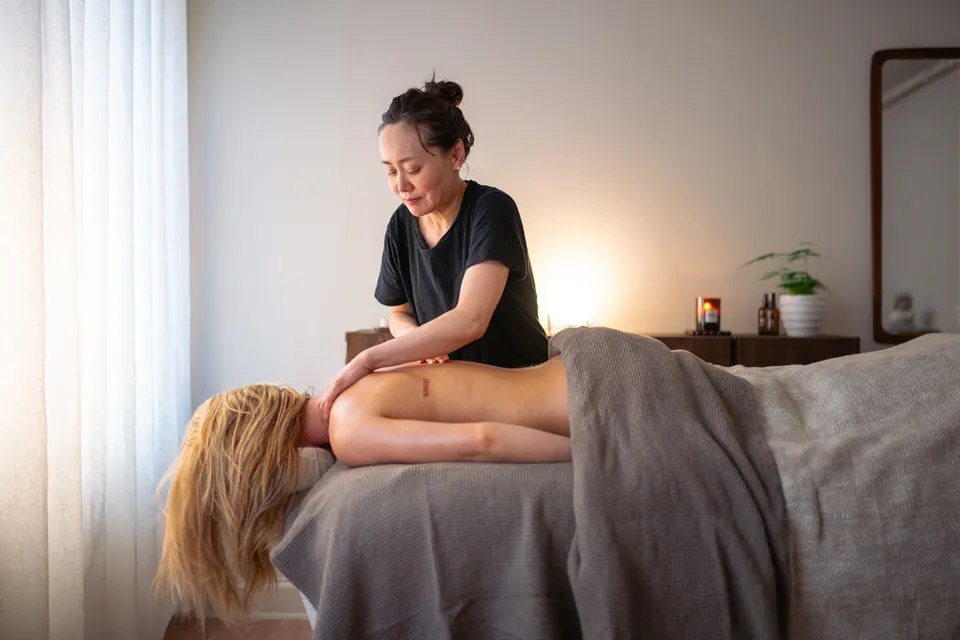
Body massage · 10 min
Pelvic girdle pain in pregnancy — symptoms and everyday comfort
Stairs suddenly feel harder. Turning over in bed hurts, and getting dressed is easier sitting down. Pelvic girdle pain in pregnancy often makes itself known during ordinary movements. In Denmark you may hear it called bækkenløsning. Early advice, small adjustments to daily activities and well-supported rest can make this time easier. Massage has a place too: caring for tired muscles and giving you an opportunity to lie comfortably and unwind.

What is pelvic girdle pain?
Pregnancy-related pelvic girdle pain, or PGP, describes symptoms around the ring of bones and joints at the base of your spine. You may feel pain at the front near the pubic symphysis, at the back around the sacroiliac joints, or in several places. It can also be felt in the groin or thighs. The older term symphysis pubis dysfunction, or SPD, describes a related way these symptoms have been discussed.
The Danish word bækkenløsning does not mean that the pelvis is coming apart or being damaged with each step. Pregnancy changes the loads on your body and how you move, but one hormone or weak muscle group does not explain every case. There is no need to decide for yourself that your pelvis is unstable because something clicks. A conversation and assessment help establish what is causing your symptoms and what support fits.

The pubic symphysis joins the front of the ring; the sacrum forms its posterior connections. This illustrates normal anatomy, not a pelvis separating during pregnancy.
View a larger illustration
Symptoms to notice in daily life
Commonly difficult activities include walking, climbing stairs, standing on one leg, getting out of a car and rolling over in bed. Discomfort may build after an active day or make changing position difficult. Two people with the same description of their pain can have different needs: one struggles after a longer walk, while another mainly finds night-time movements painful.
Before an appointment, note a few examples. Where does it hurt? Which movement brings it on? What helps when you rest? Can you walk comfortably between rooms at home? This is more useful than searching for the perfect medical label. PGP does not automatically mean that your baby is being harmed, but difficulty managing ordinary activities is enough reason to ask for help. You do not need to compare your pain with somebody else's.
When to speak to your midwife or doctor
Mention pelvic pain during your pregnancy care, particularly if it affects walking, sleeping, stairs or your usual responsibilities. You do not have to wait until it is severe. An early assessment can check whether the symptoms fit pregnancy-related pelvic girdle pain and help you access suitable care. This may include a physiotherapist experienced in pregnancy and pelvic joint problems.
Sudden pain accompanied by bleeding, fluid loss, contractions or feeling significantly unwell should not be dismissed as ordinary strain. Contact your maternity care team. New symptoms that do not clearly relate to movement also deserve assessment. A massage appointment cannot establish whether a pregnancy is progressing normally; that belongs with your midwife and doctor. Knowing when to seek that advice makes it easier to use comfort-focused treatments appropriately.
Making everyday movements easier
Sit down to get dressed rather than balancing on one leg. Put frequently used items within easy reach so that you are not repeatedly bending, twisting or using the stairs. Break heavier tasks into shorter stages, or ask for help carrying shopping. These changes may look small, but they concern movements you repeat throughout the day and can meaningfully affect how manageable that day feels.
Change position before a long spell at a desk or on your feet increases discomfort. You do not necessarily need to stop all movement: match activity to your symptoms and the advice you have received. If a particular task repeatedly makes things worse, discuss another way to approach it. Strong stretching of a painful area is not automatically the answer. Specific exercises should be selected for your circumstances rather than borrowed from somebody else's routine.
Resting and sleeping with support
A pillow between your legs can make side-lying more comfortable. Supporting the bump may also reduce the need to tense other parts of your body to hold a position. Notice what actually feels easier rather than copying the appearance of a particular sleeping posture. Your midwife or physiotherapist can help adjust the support and the way you turn over in bed.
Plan rest before discomfort makes it difficult to get out of the chair again. Having pillows, water and everyday items nearby is a simple organisational help. If pain repeatedly interrupts sleep, mention it at your consultation. Sleep and day-to-day function are important parts of the assessment. They are not minor details you need to play down because you assume other pregnant people must have more serious problems.
Physiotherapy and suitable movement
Physiotherapy may include assessing movement, advice for everyday tasks and individually chosen exercises. Some people also benefit from equipment such as an appropriately fitted pelvic support belt. There is no single package everyone needs. The purpose is to make functioning easier, rather than to prove how much discomfort you can tolerate during a stretch or a workout.
Danish and British guidance both emphasise this kind of support for pregnancy-related pelvic pain. Massaging muscles alone does not replace the whole care plan. If you are already seeing a physiotherapist, tell us about advice on positioning and touch. We can respect it during your visit without introducing a competing exercise programme or manipulating the pelvic joints. Clear roles help different parts of your care work alongside one another.
Where pregnancy massage fits
Massage helps the muscles of the back, shoulders and neck relax when changing posture and daily effort have left them tired. Comfortable support on the treatment table and unhurried touch also give you time to rest. These are worthwhile contributions to how you feel, even when the cause of pelvic pain needs its own assessment and care. We do not have to work directly over the painful area.
We do not promise to close the pelvis, reposition the pubic joint or solve PGP in one session. If a movement or position increases discomfort, we change the plan. We also explain when postponing an appointment makes more sense. Pregnancy massage should follow your comfort and current wellbeing instead of a fixed sequence that must be completed regardless of how you feel on the day.
The pregnancy ritual with Kamila
At Manual Therapies, our 90-minute ritual combines gentle dry brushing, pregnancy massage and hydrating facial care. Support cushions help you settle comfortably. The different parts can be adapted to your preferences. If you dislike brushing or need extra time to find a suitable position, discuss this with Kamila before starting. You can also request changes once the appointment is under way.
Our clinic welcomes clients from the second trimester when there are no contraindications and with consideration for your doctor's advice. This is the framework of our service, not a universal dividing line for every type of massage. Read the treatment description and contraindications before booking. If your pelvic pain has already been assessed, let us know in advance about limitations and recommendations that matter for the appointment.
Source: [5]
What to tell us before booking
A short message is enough to begin: your stage of pregnancy, the main symptoms, positions you find difficult and any particular recommendations. If lying on your side or turning over is uncomfortable, say so directly. We do not expect a self-diagnosis. We want to establish whether the service and the arrangements for a visit suit what you need at this point.
Allow time to travel without rushing, and avoid placing an exhausting task immediately after the massage. You will see the current duration and price before confirming a booking. Our clinic is at Falkoner Allé 104 in Frederiksberg, Copenhagen. The first-visit pregnancy massage guide provides further practical information about preparing for an appointment, making adjustments and choosing a comfortable experience.
If pain continues after birth
Symptoms gradually ease for many people, but giving birth is not a promise that every pain will disappear immediately. If walking, turning in bed or caring for your baby is still difficult, raise it at your postnatal follow-up. Lasting limitations are not something you simply have to accept as the price of pregnancy. Your situation can be reassessed and support adjusted to how you are functioning now.
New responsibilities also change the demands on your body. Carrying a baby, feeding and repeatedly bending can tire the back and shoulders. Look at how tasks are organised and where rest is possible, rather than searching for one perfect position to hold all day. Returning to exercise or treatments depends on the birth, healing and professional advice. This guide explains pregnancy-related pelvic pain; it does not replace an individual postnatal care plan.
Source: [3]
Questions about pelvic pain and pregnancy massage
Does PGP mean that my pelvis is coming apart?
No. The term describes pregnancy-related symptoms around the pelvic girdle, not damage to the bones with each movement. The older Danish name bækkenløsning can sound alarming. Assessment considers your symptoms and function; the name alone does not establish a particular cause.
Does massage treat pelvic girdle pain?
Massage helps with comfort and relaxation of tired muscles, but does not on its own replace assessment or physiotherapy tailored to PGP. Our service combines pregnancy massage and skincare. It does not involve repositioning joints, examining the pregnancy or offering a pelvic rehabilitation programme.
Can I book if PGP has already been diagnosed?
Contact us before booking so we can discuss your wellbeing, comfortable positions and professional advice. The diagnosis alone is not enough to determine whether a session fits. The severity of symptoms, the course of the pregnancy and any contraindications also need to be considered.
From which stage of pregnancy is the ritual available?
At Manual Therapies we offer it from the second trimester when there are no contraindications. Discuss massage with your doctor before the first visit and tell us about particular recommendations. This clinic policy does not mean that every kind of earlier touch is unsafe.
Should I stop moving altogether?
Do not adopt that rule on your own. Activity and rest should match your symptoms and professional advice. Avoid tasks that make pain worse and discuss specific exercises with a physiotherapist or your maternity care team. Do not push through severe pain in order to complete a routine.
What if a position becomes uncomfortable during massage?
Tell Kamila straight away. You can ask for different support, a change of position, lighter pressure or a break. We adapt the ritual around your comfort. There is no need to stay completely still or finish a particular stage simply because it was planned originally.
When should I seek medical help instead of massage?
Contact your midwife or doctor for severe or sudden pain, significant difficulty walking or new concerning symptoms. Bleeding, fluid loss, contractions or feeling markedly unwell require contact with maternity care rather than a relaxation appointment. Ask for help when symptoms affect everyday function too.
Sources and scope
These sources explain the topics and guidance discussed. Details of our treatments and appointment aftercare come from the current clinic catalogue.
- Sundhed.dk: Graviditetsrelaterede bækkensmerter
- NHS: Pelvic pain in pregnancy
- RCOG: Pelvic girdle pain and pregnancy
- Sundhed.dk: Graviditet og motion
- Manual Therapies: Pregnancy massage — ritual
First published: 27 October 2026. Text rewritten and updated: 27 October 2026.
MANUALTHERAPIES · FREDERIKSBERG
Explore related treatments

Body massage
Pregnancy massage — ritual
A relaxing ritual designed with the expectant mother in mind—her comfort, well-being, and need for rest. It combines gentle dry body brushing, a professional pregnancy massage, and facial care with a moisturizing mask.

Gift cards
Give someone time for themselves
Choose an amount or treatment. The recipient can arrange a suitable appointment and use the card at our clinic.